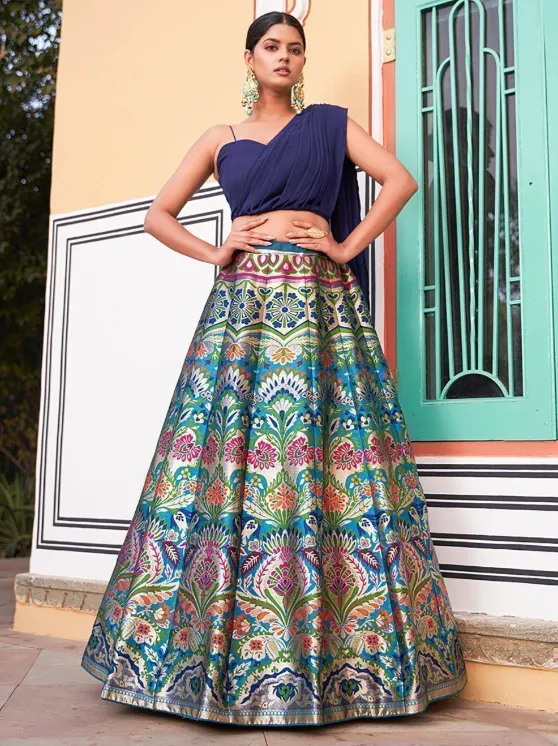
The best outfit clue in a favourite film song often lasts barely a second. A dancer turns, the skirt opens, and a strip of green crosses a field of purple as she brings her arm down. When choosing a bollywood style lehenga for a sangeet performance, it helps to remember exactly which bit made you rewind. You might love the colour change more than the skirt itself. A blouse, skirt and dupatta give you three pieces to work with when recreating that moment.
Find the Moment Worth Borrowing
Play the song once with the sound off and watch what the clothes actually do. Perhaps the dancer stands still through the verse, and the skirt only comes alive on the first beat of the chorus. A dove-blue organza set with floral detailing and a matching dupatta gives a turn a sweep of nearly continuous colour. If you love the flash of a contrasting drape instead, take that idea into your own outfit, even if the colour in the film was entirely different.
Let the Dupatta Lead
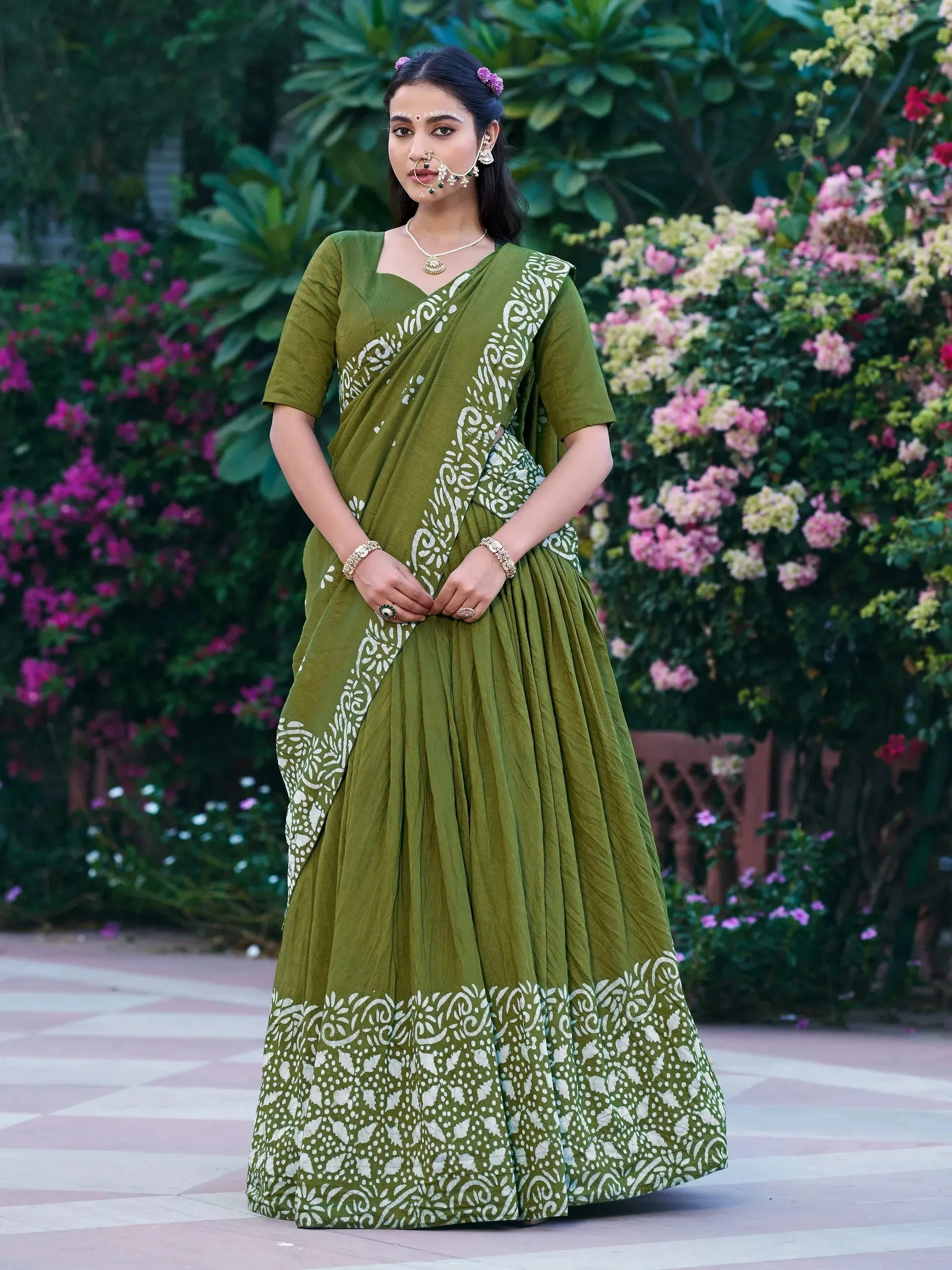
A Half Saree Lehenga gives the dupatta a distinct role. Worn diagonally across the blouse, it creates the line of a saree pallu while the separate skirt supplies the flare. One festive Dola silk set pairs a purple zari-checked skirt and matching blouse fabric with a green georgette dupatta edged in lace. That combination makes a simple step expressive. Turning one shoulder towards the audience brings the green forward, while turning back reveals more of the purple checks without requiring a full spin.
Set the Drape in Motion
Start the drape with your arms relaxed. Rest one end of the dupatta at the waist, draw the fabric across the front and bring it over the opposite shoulder. Spread the border until the lace is visible, then lift both arms into the highest position in your routine. Leave enough ease across your ribs to hold that pose for a few counts. Once you like the line, have someone secure the folds at the shoulder and waist while you stand as you would on stage.
Give Your Shoulders Some Room
A choli can feel comfortable through an entire fitting and still pull during the first overhead clap. If your set includes blouse fabric, show your tailor the movement before settling on sleeves. Explain which side will carry the dupatta, particularly if the blouse design includes shoulder ties or raised embroidery where the folds will sit. With a stitched blouse, put it on with the drape and run through these five movements from your number, or their closest equivalents, at the speed you’ll actually dance.
-
Clap with both hands above your head.
-
Reach across to your opposite shoulder.
-
Turn once in each direction.
-
Step backwards into your starting place.
-
Hold the final pose for four counts.
Make Space for Every Skirt
A skirt needs more space in a group number than it does in a solo rehearsal. Two cousins can stand an arm’s length apart and still brush skirts when they turn towards each other. Mark your starting positions, dance the chorus together, then look at where everyone finishes. If the row has drifted, move the starting marks or shorten the travelling step. Keeping the formation a little wider can give each skirt room to open as the whole group turns on the same beat.
After the Music Stops
Plan for the few minutes immediately after the music ends. A drape secured for dancing may feel snug when you sit down to eat, especially where the folds meet the waistband of your skirt. Keep the shoulder folds together and loosen the waist attachment once you’ve left the floor. The fabric can then fall more freely beside the skirt. Before the performance, show a cousin where you placed the fastening so you have a familiar pair of hands if you need help afterwards.
Conclusion
At the last rehearsal, give the friend who chose the song a seat where the audience will be. Dance the passage you both know by heart and ask what they noticed when the chorus began. If the green border swept into view just as you hoped, you’ve kept the part of the film that mattered to you. Leave the drape there. By the time the wedding guests start clapping along, you’ll have something better to think about than adjusting a pleat.